What Is Poi? Hawaii’s Traditional Luau Taro Staple
July 18, 2026
The Heart of the Hawaiian Table
If you attend a traditional luau, you will almost certainly be offered a small bowl of a soft, purple-gray paste called poi. To many visitors it is a mystery, but to Hawaiians it is one of the most important and sacred foods there is. Poi is far more than a side dish. It is a living link to Hawaiian history, family, and the land. Here is what poi is and why it matters so much.
What Poi Is Made From
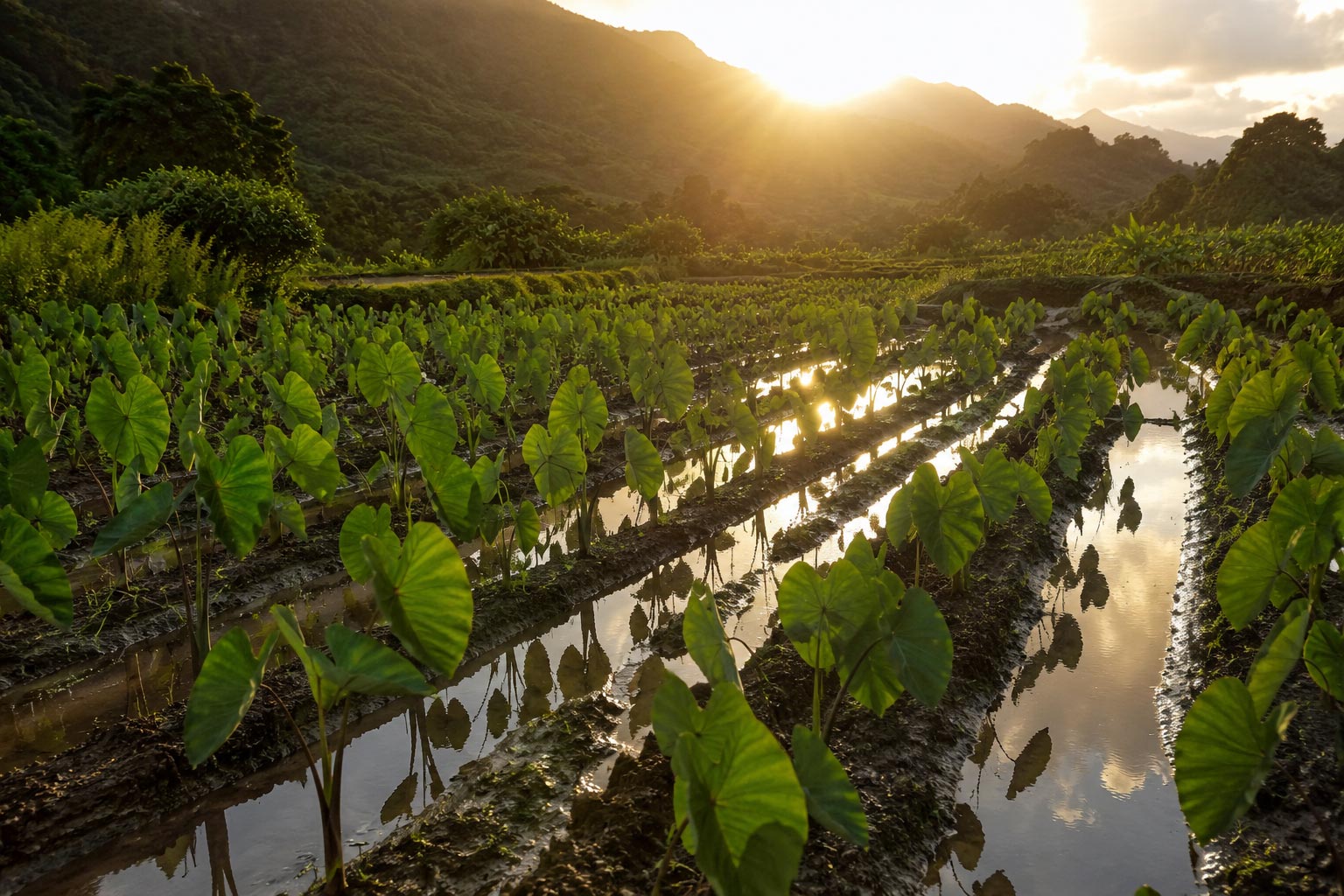
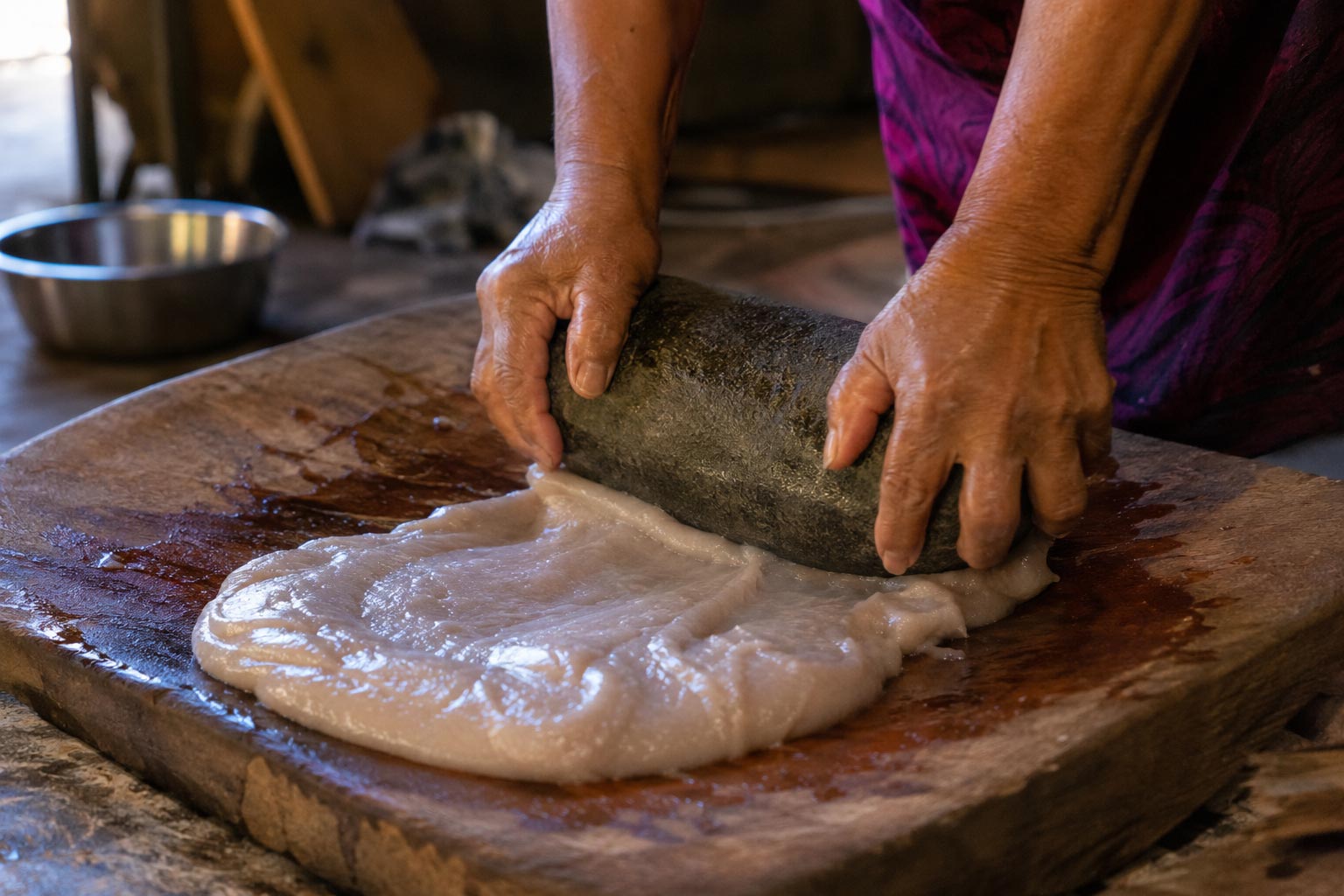
Poi is made from taro, known in Hawaiian as kalo. The starchy underground corm of the taro plant is steamed until tender, then pounded with a little water until it becomes a smooth, stretchy paste. That is really all it is: taro and water. The result is a naturally gluten-free staple that has fed the Hawaiian people for centuries.
Why Poi Is Sacred
Poi carries deep cultural and spiritual meaning. In the Hawaiian creation story, the taro plant, called Haloa, is honored as an elder sibling of the Hawaiian people, which makes kalo and the poi it becomes a symbol of family and life itself. Tradition holds that when a bowl of poi is open on the table, arguments should stop, because the family ancestor is present. That reverence is part of why poi is treated with such respect.
What Poi Tastes Like
Poi has a mild flavor that surprises many first-timers. Fresh poi is smooth and slightly sweet, while poi that has been left to sit for a day or two ferments and turns pleasantly tangy or sour. Its taste is subtle on purpose, since it is meant to balance and complement richer, saltier dishes rather than stand out on its own.
How to Eat Poi
Traditionally, poi is eaten with the fingers, and its thickness is even described that way. You may hear it called one-finger, two-finger, or three-finger poi, referring to how many fingers it takes to scoop a bite. It pairs beautifully with the other stars of a luau plate.
Alongside smoky kalua pork from the imu.
With salty lomi salmon or fresh raw fish.
As a cooling companion to bolder, richer flavors.
Give it a try the local way, scooped up with a bite of pork, and you will understand how the flavors were meant to work together.
Give Poi a Try
When a bowl of poi comes your way at a luau, do not pass it by. Tasting poi is a chance to share in a food that has nourished Hawaii for generations and still sits at the center of the culture. Approach it with an open mind and a little respect, and you will taste a genuine piece of Hawaiian heritage.
A Taste of Old Hawaii
Poi is humble in appearance but rich in meaning, a simple paste of taro and water that carries the story of the Hawaiian people. The next time you sit down at a luau, scoop up a taste, savor the connection to the land and to generations of tradition, and enjoy one of the truest flavors of Hawaii.
The History of the Hawaiian Luau: How the Feast Began
June 18, 2026
More Than a Party: A Feast With Deep Roots
Today a Hawaiian luau means food, music, hula, and an unforgettable island night. But the celebration we know now grew out of something much older and more meaningful. For centuries, Hawaiians gathered for large feasts to mark important moments, and the story of how those feasts became the modern luau is one of the most interesting chapters in island culture.
Understanding where the luau came from makes the experience richer. When you sit down to that feast, you are taking part in a tradition that stretches back generations and once carried real spiritual and social weight.
Feasts Before the Word Luau
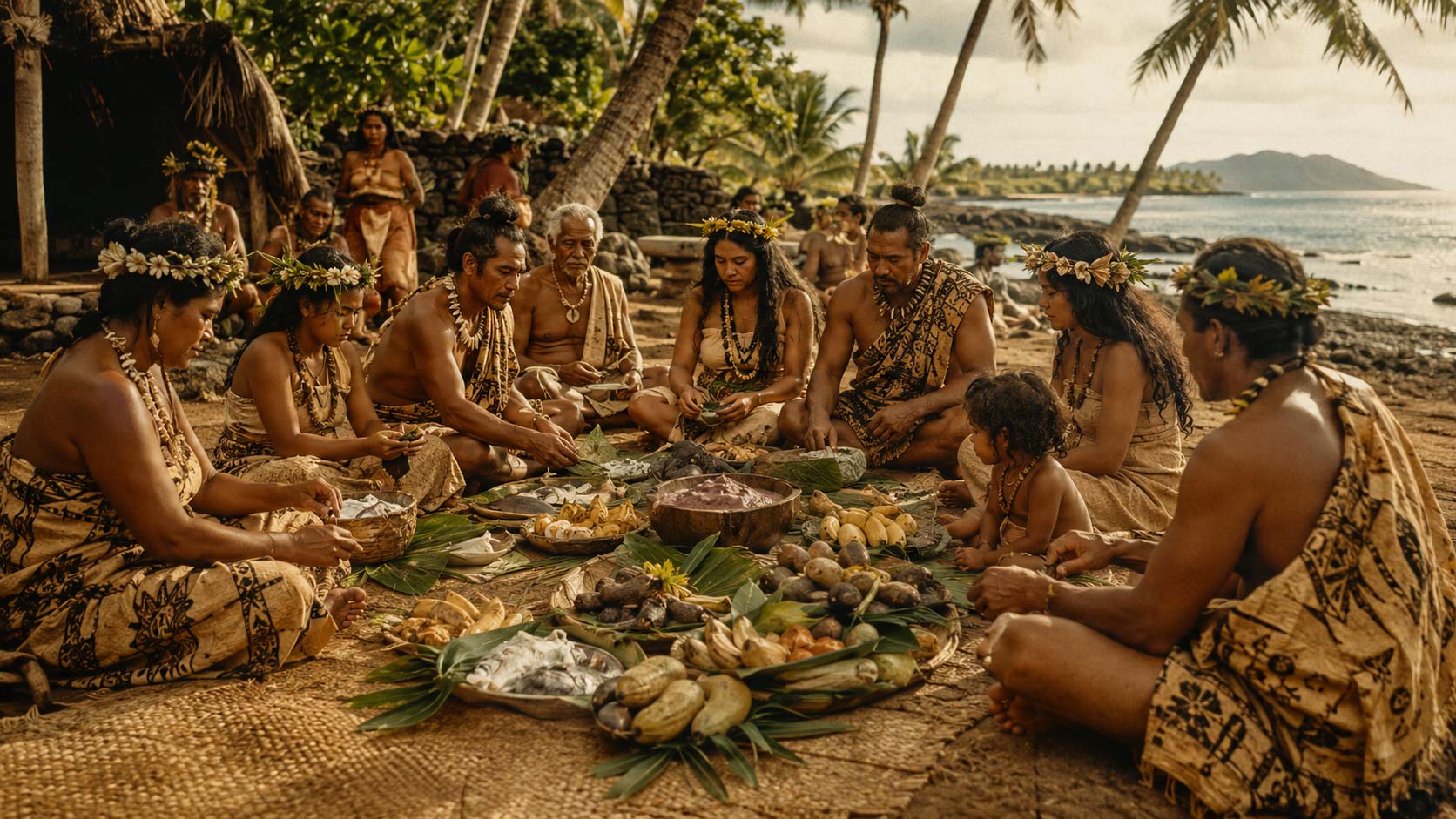
Long before anyone used the word luau, Hawaiians held grand feasts called aha aina and paina. These gatherings celebrated victories in battle, the launch of a great canoe, a good harvest, or the birth of a child. Food was prepared in the underground imu oven, and the community came together to share it.
These early feasts followed strict religious rules. Under the old kapu system, men and women were not allowed to eat together, and certain foods were forbidden to women entirely. A feast was not a casual party. It was tied closely to law, religion, and the order of Hawaiian society.
The Feast That Changed Everything in 1819
A turning point came in 1819. After the death of Kamehameha the Great, his son Liholiho became king as Kamehameha II. In a bold and history changing act, he sat down and ate together with women at a public feast. By openly breaking the eating kapu, he ended the old system of food restrictions in a single powerful moment.
This event, often called the free eating, opened the door for the shared, joyful feasts that would follow. Men and women dining together became normal, and the communal celebration slowly took on the relaxed, welcoming spirit we feel at a luau today.
How the Name Luau Came to Be
The word luau is actually newer than the feast itself. It comes from a popular dish made from the young, tender leaves of the taro plant, often cooked with coconut milk and chicken or octopus. The taro leaves themselves are called luau.
Around the 1850s, writers and visitors began using the name of that beloved dish to describe the whole feast. The name stuck, and over time luau replaced the older terms in everyday speech. A few simple points help keep the timeline clear.
The feast itself is ancient, going back centuries as the aha aina or paina.
The shared, open style of feasting took hold after 1819.
The name luau only became common around the mid 1800s, borrowed from the taro leaf dish.
Carrying the Tradition Forward
When you attend a luau in Hawaii, you are doing more than enjoying a great meal and a beautiful show. You are stepping into a living tradition that has survived huge changes in island history, from ancient feasts bound by kapu to the open celebrations of today. That history is part of what makes a luau feel so special, and it is the reason we always encourage guests to attend with respect and curiosity. The food may be the draw, but the story behind it is the heart of the night.
The Imu: How Kalua Pig Is Cooked Underground
June 7, 2026
What Is an Imu
An imu is a traditional Hawaiian underground oven. Instead of cooking with an open flame or a modern stove, the imu cooks with trapped heat and steam deep in the earth. The word kalua actually means to cook in an underground oven, so kalua pig simply means pig cooked in the imu. This method is one of the oldest cooking styles in Hawaii, passed down through families and still used at luaus across the islands today.
The beauty of the imu is its simplicity. It uses only fire, rocks, leaves, and time. There are no dials or thermometers, just skill and patience handed down over generations.
Building the Fire and Heating the Rocks
The process starts with digging a wide pit in the ground. A wood fire is built inside it, often using kiawe or other hardwoods that burn hot and steady. On top of and around the fire go special rocks, usually dense volcanic stones that can soak up heat without cracking.
The fire burns for a long time until the rocks glow and the wood has fallen to embers. These hot rocks are the engine of the whole oven. They hold their heat for hours, which is exactly what a whole pig needs to cook all the way through.
Wrapping and Burying the Pig
Once the rocks are ready, the cooks line the pit with layers of banana stumps and leaves, along with ti leaves. This green layer protects the meat and creates the steam that does the cooking. The pig, rubbed with salt, is placed on top, and more leaves are piled over it.
Then the pit is sealed. Wet burlap or cloth goes on next, followed by a thick layer of dirt or sand to lock everything in. The goal is an airtight, well insulated chamber. A few key things make this work:
The hot rocks provide steady heat from below for many hours.
The wet leaves and stumps create steam that keeps the meat moist.
The dirt seal traps heat and smoke so nothing escapes.
The Long, Slow Cook
Now comes the hardest part, which is waiting. A whole pig in an imu can cook for many hours, often most of a day. During that time no one opens the pit, because letting out the heat and steam would ruin the result. The meat slowly breaks down until it is soft enough to pull apart with a fork.
When the imu is finally opened, the moment is part of the show at many luaus. Steam rises, the smell fills the air, and the cooks lift out pork that is smoky, salty, and tender. That deep, earthy flavor is something a regular oven simply cannot copy.
More Than a Cooking Method
The imu is not just a way to make dinner. It is a tradition that brings families and communities together, often with several people working through the day to tend the fire and prepare the feast. Cooking in the imu connects today’s luaus to the Hawaii of long ago, when the same method fed gatherings and celebrations.
So the next time you enjoy kalua pig at a luau, remember the hours of fire, rock, and patience hidden beneath the ground. That underground oven is the real secret behind one of Hawaii’s most beloved foods.
 Hawaii Luaus