What Is Poi? Hawaii’s Traditional Luau Taro Staple
July 18, 2026
The Heart of the Hawaiian Table
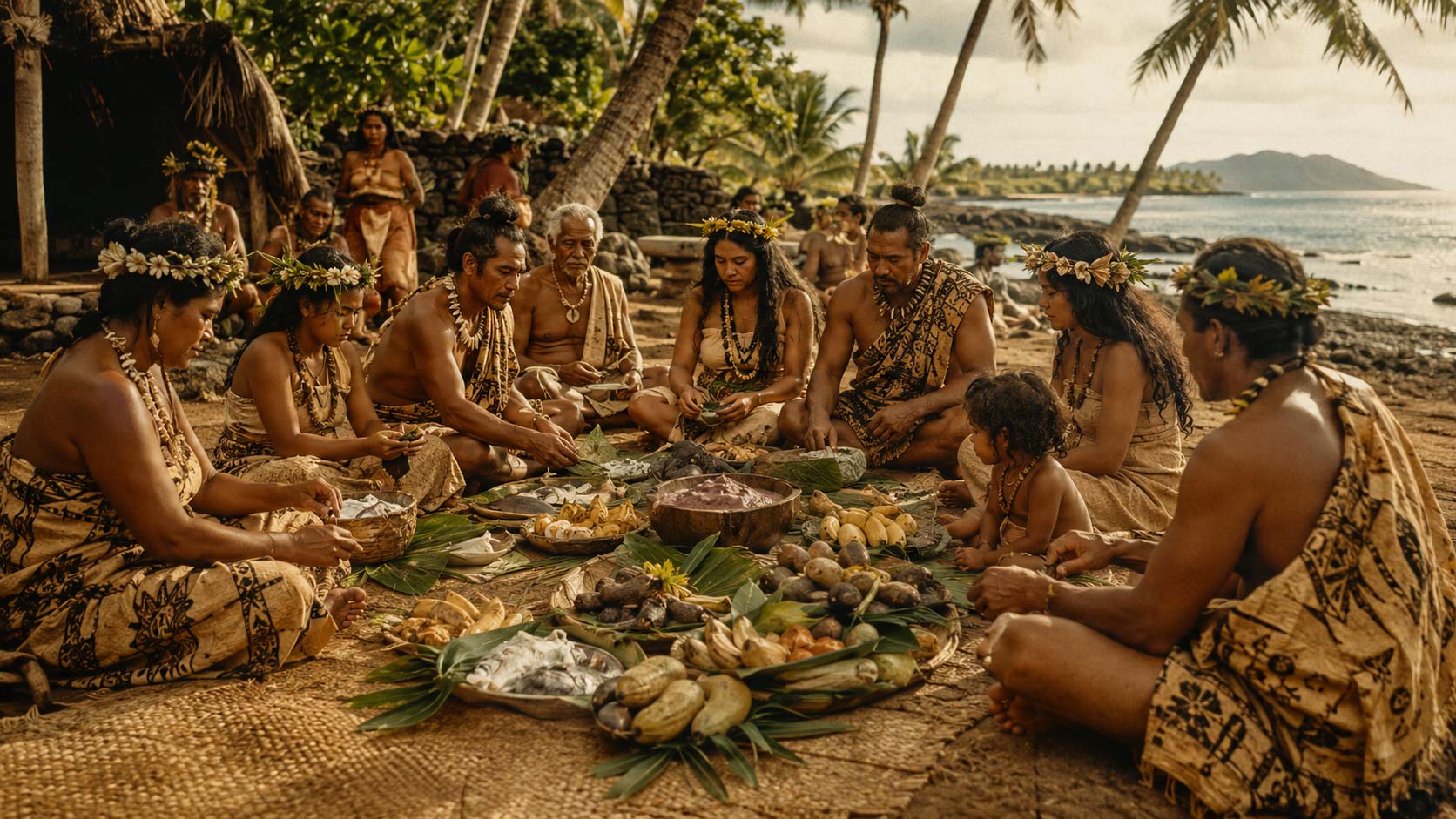
If you attend a traditional luau, you will almost certainly be offered a small bowl of a soft, purple-gray paste called poi. To many visitors it is a mystery, but to Hawaiians it is one of the most important and sacred foods there is. Poi is far more than a side dish. It is a living link to Hawaiian history, family, and the land. Here is what poi is and why it matters so much.
What Poi Is Made From
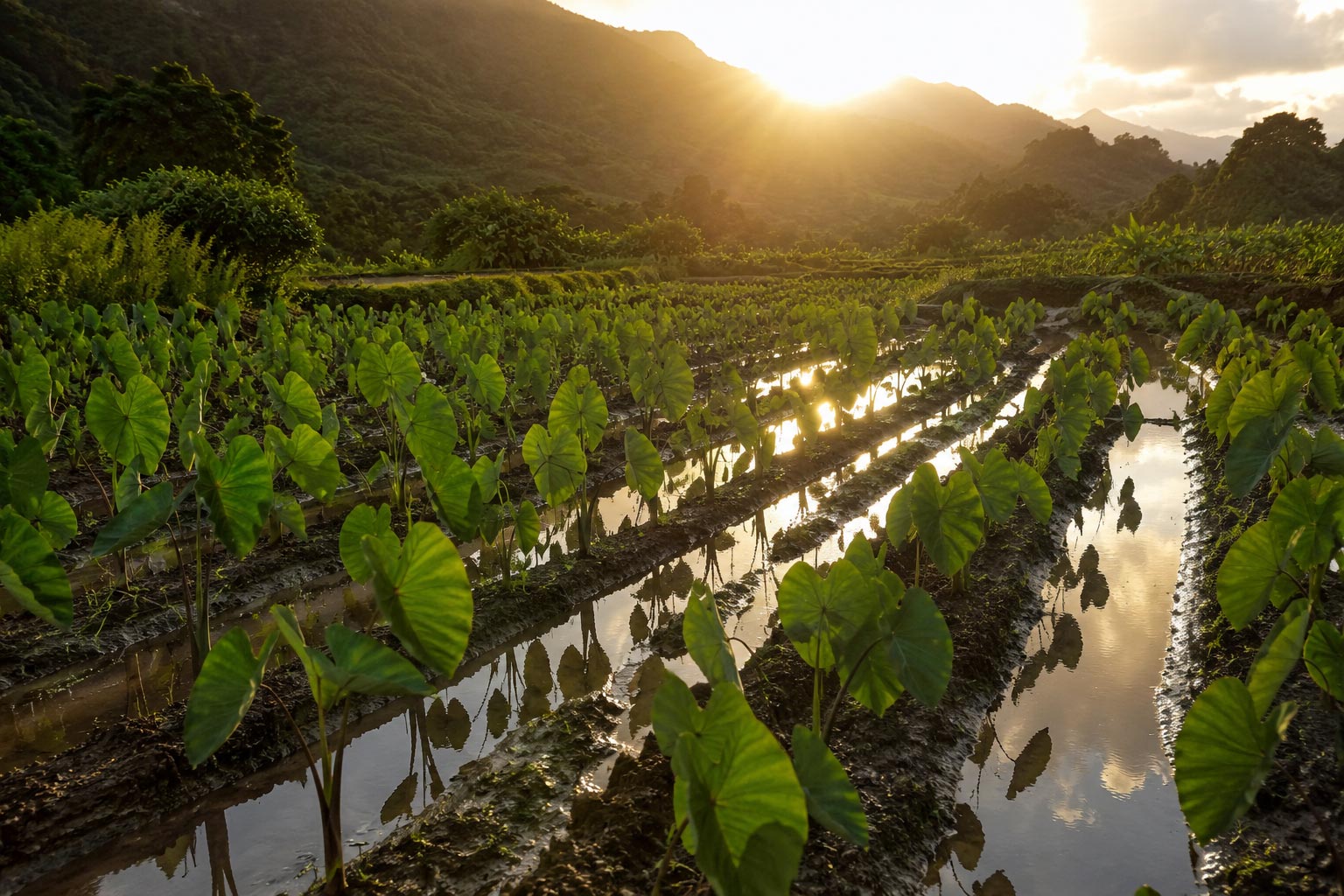
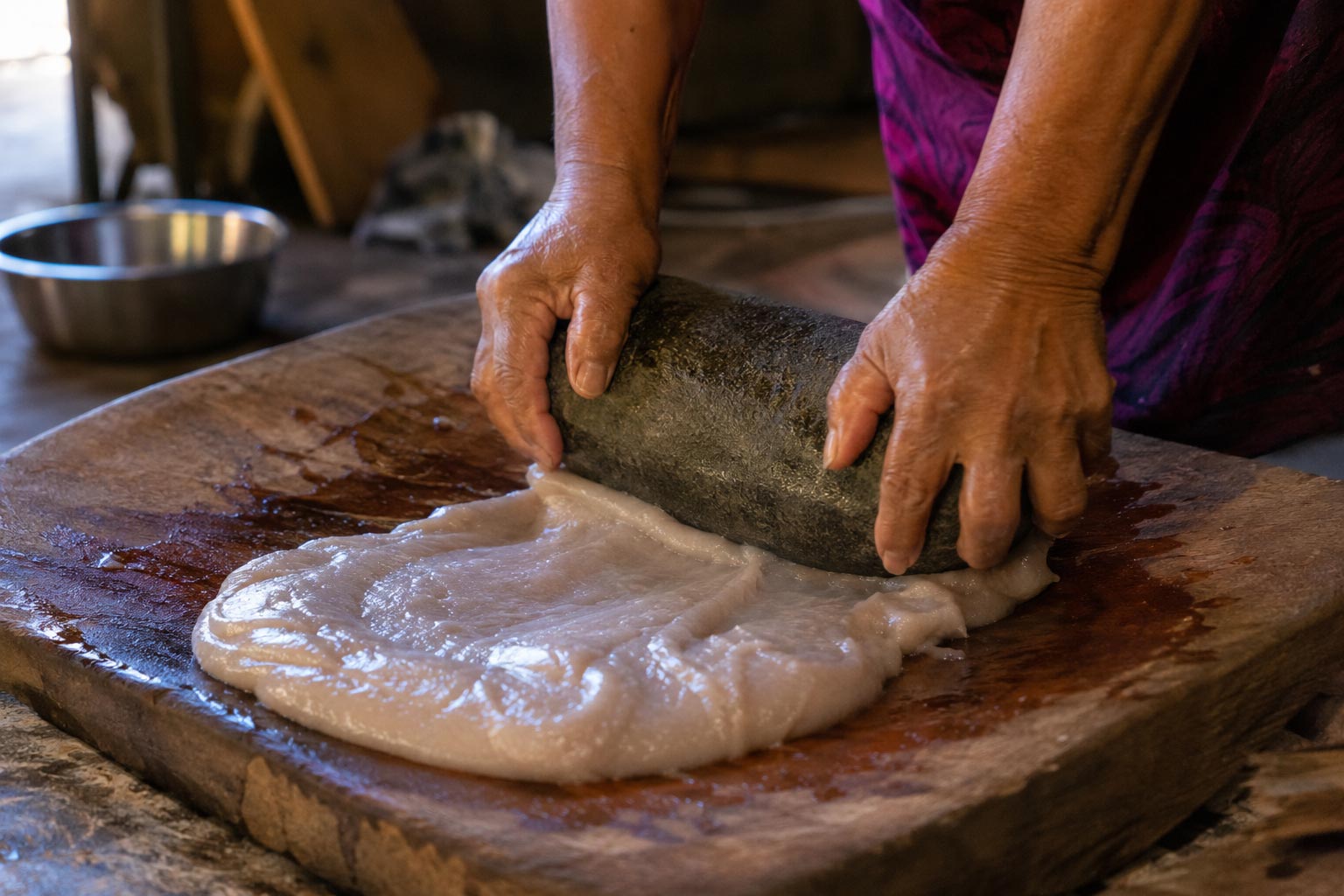
Poi is made from taro, known in Hawaiian as kalo. The starchy underground corm of the taro plant is steamed until tender, then pounded with a little water until it becomes a smooth, stretchy paste. That is really all it is: taro and water. The result is a naturally gluten-free staple that has fed the Hawaiian people for centuries.
Why Poi Is Sacred
Poi carries deep cultural and spiritual meaning. In the Hawaiian creation story, the taro plant, called Haloa, is honored as an elder sibling of the Hawaiian people, which makes kalo and the poi it becomes a symbol of family and life itself. Tradition holds that when a bowl of poi is open on the table, arguments should stop, because the family ancestor is present. That reverence is part of why poi is treated with such respect.
What Poi Tastes Like
Poi has a mild flavor that surprises many first-timers. Fresh poi is smooth and slightly sweet, while poi that has been left to sit for a day or two ferments and turns pleasantly tangy or sour. Its taste is subtle on purpose, since it is meant to balance and complement richer, saltier dishes rather than stand out on its own.
How to Eat Poi
Traditionally, poi is eaten with the fingers, and its thickness is even described that way. You may hear it called one-finger, two-finger, or three-finger poi, referring to how many fingers it takes to scoop a bite. It pairs beautifully with the other stars of a luau plate.
Alongside smoky kalua pork from the imu.
With salty lomi salmon or fresh raw fish.
As a cooling companion to bolder, richer flavors.
Give it a try the local way, scooped up with a bite of pork, and you will understand how the flavors were meant to work together.
Give Poi a Try
When a bowl of poi comes your way at a luau, do not pass it by. Tasting poi is a chance to share in a food that has nourished Hawaii for generations and still sits at the center of the culture. Approach it with an open mind and a little respect, and you will taste a genuine piece of Hawaiian heritage.
A Taste of Old Hawaii
Poi is humble in appearance but rich in meaning, a simple paste of taro and water that carries the story of the Hawaiian people. The next time you sit down at a luau, scoop up a taste, savor the connection to the land and to generations of tradition, and enjoy one of the truest flavors of Hawaii.
Which Hawaiian Island Has the Best Luau?
July 3, 2026
Every Island Has Its Own Luau Magic
A luau is a highlight of almost any Hawaii vacation, but here is something many visitors do not realize: the experience changes from island to island. If you are wondering which Hawaiian island has the best luau, the honest answer is that it depends on the kind of night you are hoping for. Each island brings its own flavor to the feast, the show, and the setting. Here is a guide to help you find your perfect match.
Oahu: Big, Iconic Luaus
Oahu is home to the largest and most famous luaus in Hawaii. These are big, polished productions, often with a full Polynesian revue, dazzling fire knife dancing, and generous buffets. Because most visitors start their trip on Oahu, it is also the easiest island for a luau, with many options a short drive from Waikiki. If you want a lively, crowd-pleasing show and simple logistics, Oahu delivers.
Maui: Scenic and Romantic
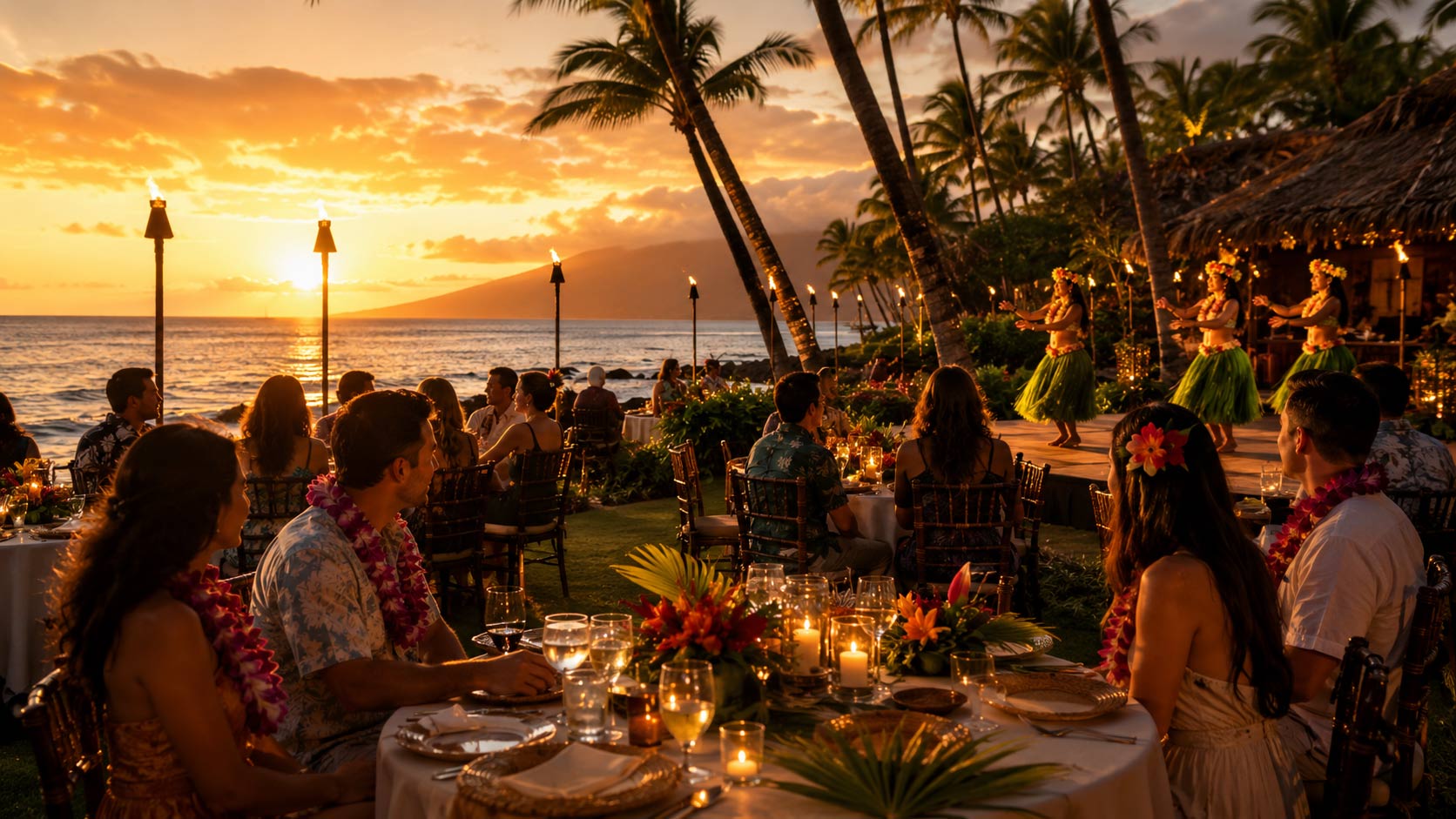
Maui is known for luaus in stunning oceanfront settings, with the sunset itself becoming part of the show. The mood here leans romantic and relaxed, making Maui a favorite for couples and honeymooners. Picture torches flickering to life as the sky turns pink over the water, a warm meal, and gentle hula. For a beautiful, intimate evening, Maui is hard to beat.
Big Island: Rooted in Tradition
Hawaii Island, the Big Island, offers luaus with a strong sense of history and culture. Many take place at resorts along the sunny Kohala Coast, and they often lean into authentic traditions, storytelling, and the deep roots of Hawaiian life. If you care most about the cultural heart of the luau and a more grounded, meaningful feel, the Big Island is a wonderful choice.
Kauai: Lush and Laid-Back
On the garden island of Kauai, luaus tend to be smaller, greener, and wonderfully relaxed. Set among tropical gardens or along quiet shores, they capture Kauai’s mellow, natural spirit, and some connect to historic sites that add extra meaning. For travelers who want a calm, scenic, less-crowded evening, Kauai shines.
So Which Island Is Best?
There is no single winner, only the best fit for you. Every island serves the traditional heart of a luau, an imu-roasted kalua pig, hula, island music, and a warm spirit of aloha. What changes is the vibe.
Oahu: the grandest shows and the easiest access.
Maui: the most romantic, sunset-soaked settings.
Big Island: the deepest sense of tradition and history.
Kauai: the most relaxed, lush, and low-key.
How to Pick the Right Luau for You
Start with the island you are already visiting, since a great luau exists on each one. From there, think about the vibe you want, whether the meal is a buffet or a served dinner, how big a show you are hoping for, and your budget. Popular luaus book up fast, so reserve ahead. As a guide to Hawaii’s luaus, we are always happy to help you match the right feast to your island and your style.
Find Your Perfect Luau Night
The best Hawaiian luau is the one that matches the night you are dreaming of, whether that is a big beachfront spectacle on Oahu, a romantic Maui sunset, a tradition-rich evening on the Big Island, or a laid-back garden feast on Kauai. Wherever you land, you will share in the food, the hula, and the aloha that make the luau a Hawaii tradition worth celebrating.
What Is a Hawaiian Lei? The Meaning Behind the Flower Garland
June 29, 2026
More Than a Flower Necklace
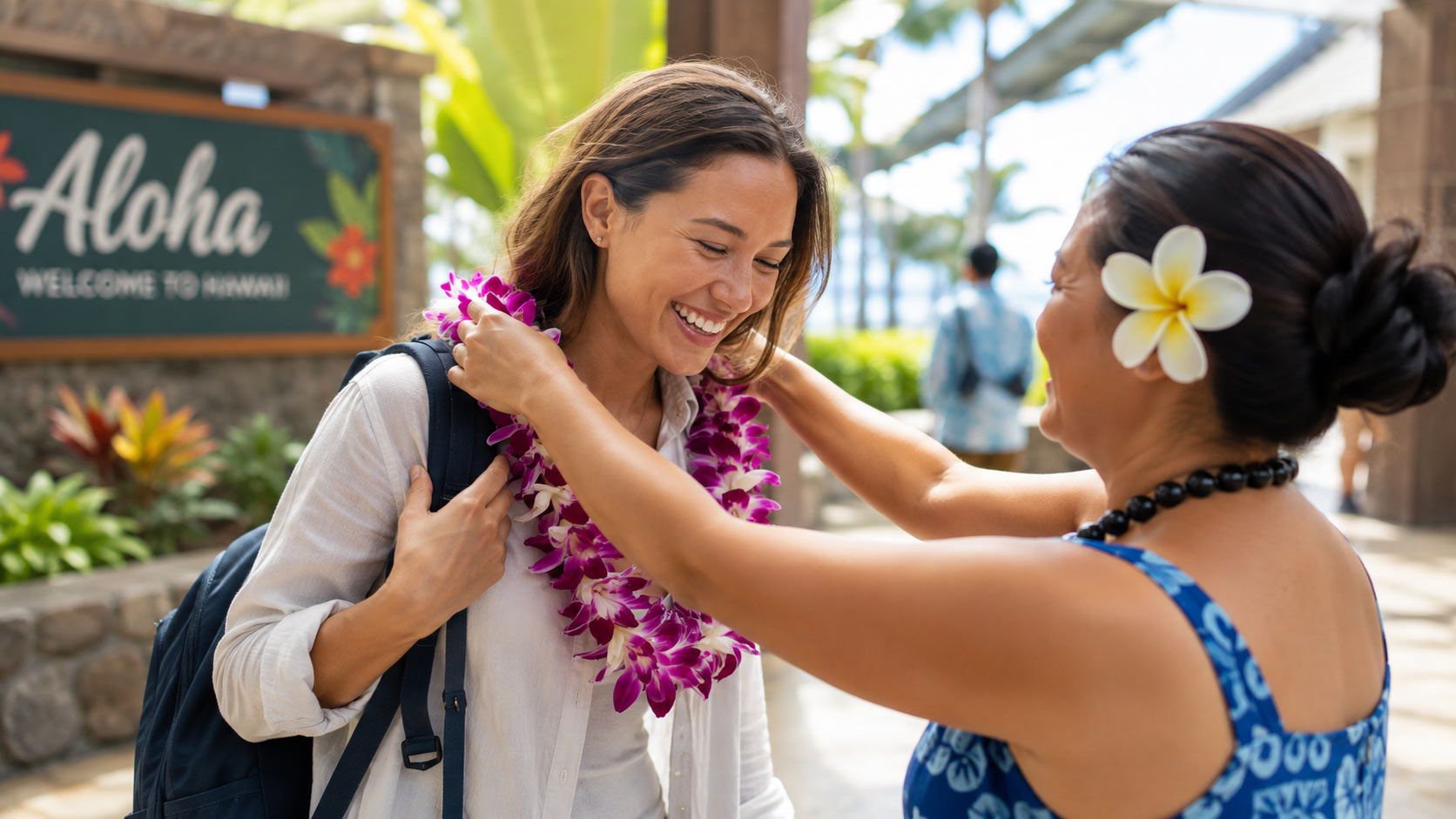
If you have been to a luau or stepped off a plane in the islands, you may have been greeted with a lei, a garland of flowers placed around your neck. It is one of the most recognized symbols of Hawaii, but the lei is far more than a pretty souvenir. It carries deep meaning, and understanding it makes the gesture even more special the next time you receive one.
What a Lei Really Means
At its heart, a lei is a symbol of aloha, the love, warmth, and respect that defines Hawaiian culture. Giving a lei is a way to say welcome, congratulations, thank you, or farewell, all through a single heartfelt gift. People wear lei to mark birthdays, graduations, weddings, and, of course, to greet guests at a luau. The act of giving and receiving one is a small ceremony of connection between people.
The Many Kinds of Lei
While flower lei are the most familiar, Hawaiians craft lei from many natural materials, each with its own significance.
Plumeria and orchid lei, fragrant and colorful, common at celebrations.
Maile lei, made from fragrant green leaves and often used at weddings and important occasions.
Kukui nut and shell lei, durable styles that can be kept as lasting keepsakes.
Each island even has its own traditional lei and signature flower or plant, which makes the craft a reflection of place as well as feeling.
Lei Etiquette to Know
Because a lei is given with aloha, there is a gentle etiquette around it. Accept a lei graciously, since refusing one can be seen as rejecting the giver’s warmth. It is customary to wear it draped over the shoulders, resting both in front and behind. When it is time to part with a fresh lei, the respectful tradition is to return it to nature rather than throw it in the trash, by hanging it on a tree or returning the flowers to the earth.
The Lei at a Luau
At a luau, the lei greeting sets the tone for the entire night. That first moment, when a fresh flower lei is placed around your neck and you catch its sweet scent, is a warm welcome into the celebration ahead. It is a simple gesture that instantly makes guests feel cared for, which is exactly the spirit of aloha a luau is built around. There is even a special day, Lei Day on May 1, dedicated to celebrating the tradition across Hawaii.
A Garland of Aloha
The next time a lei is placed around your neck, you will know it carries generations of meaning: a circle of flowers given as a symbol of love and welcome. Wear it proudly, treat it with respect, and let it remind you of the aloha spirit that makes a Hawaiian luau, and the islands themselves, so unforgettable.
The History of the Hawaiian Luau: How the Feast Began
June 18, 2026
More Than a Party: A Feast With Deep Roots
Today a Hawaiian luau means food, music, hula, and an unforgettable island night. But the celebration we know now grew out of something much older and more meaningful. For centuries, Hawaiians gathered for large feasts to mark important moments, and the story of how those feasts became the modern luau is one of the most interesting chapters in island culture.
Understanding where the luau came from makes the experience richer. When you sit down to that feast, you are taking part in a tradition that stretches back generations and once carried real spiritual and social weight.
Feasts Before the Word Luau
Long before anyone used the word luau, Hawaiians held grand feasts called aha aina and paina. These gatherings celebrated victories in battle, the launch of a great canoe, a good harvest, or the birth of a child. Food was prepared in the underground imu oven, and the community came together to share it.
These early feasts followed strict religious rules. Under the old kapu system, men and women were not allowed to eat together, and certain foods were forbidden to women entirely. A feast was not a casual party. It was tied closely to law, religion, and the order of Hawaiian society.
The Feast That Changed Everything in 1819
A turning point came in 1819. After the death of Kamehameha the Great, his son Liholiho became king as Kamehameha II. In a bold and history changing act, he sat down and ate together with women at a public feast. By openly breaking the eating kapu, he ended the old system of food restrictions in a single powerful moment.
This event, often called the free eating, opened the door for the shared, joyful feasts that would follow. Men and women dining together became normal, and the communal celebration slowly took on the relaxed, welcoming spirit we feel at a luau today.
How the Name Luau Came to Be
The word luau is actually newer than the feast itself. It comes from a popular dish made from the young, tender leaves of the taro plant, often cooked with coconut milk and chicken or octopus. The taro leaves themselves are called luau.
Around the 1850s, writers and visitors began using the name of that beloved dish to describe the whole feast. The name stuck, and over time luau replaced the older terms in everyday speech. A few simple points help keep the timeline clear.
The feast itself is ancient, going back centuries as the aha aina or paina.
The shared, open style of feasting took hold after 1819.
The name luau only became common around the mid 1800s, borrowed from the taro leaf dish.
Carrying the Tradition Forward
When you attend a luau in Hawaii, you are doing more than enjoying a great meal and a beautiful show. You are stepping into a living tradition that has survived huge changes in island history, from ancient feasts bound by kapu to the open celebrations of today. That history is part of what makes a luau feel so special, and it is the reason we always encourage guests to attend with respect and curiosity. The food may be the draw, but the story behind it is the heart of the night.
Luau Etiquette: Tips for a Respectful and Memorable Night
June 14, 2026
Arrive On Time and Ready to Relax
A luau runs on a schedule, and the best moments often happen early. Many luaus open with a lei greeting, a shell lei or fresh flower lei placed around your neck as a warm welcome. Arriving on time lets you enjoy this gracious start, find good seats, and settle in before the program begins. Come ready to slow down and be present, since a luau is meant to be savored rather than rushed.
Receive the Lei With Grace
The lei is a symbol of aloha and affection, so accept it warmly and wear it for the evening. It is considered polite to leave it on rather than taking it off in front of your host. When a lei is offered, a simple thank you and a smile is all that is needed. This small gesture honors a tradition that has welcomed guests to Hawaiian gatherings for generations.
Honor the Imu Ceremony
One of the highlights of many luaus is the imu ceremony, when the kalua pig is lifted from an underground oven where it has cooked for hours. This is a moment of skill and tradition, not just a show. Watch quietly, listen to the story the host shares, and feel free to take photos when invited. Treating the ceremony with attention and respect honors the families who have kept this practice alive.
Be Thoughtful With Photos and Performers
The hula and the fire knife dance are stunning, and you will want to capture them. Be courteous about it. Stay in your area, avoid blocking the view of others, and follow any guidance about flash photography. If you are invited on stage to learn a few hula steps, join in with a good heart, since the performers love sharing their culture. A respectful guest makes the night better for everyone.
Dress the Part and Mind the Buffet
Luaus are casual but festive, so an aloha shirt or a sundress fits right in. At the buffet, take a reasonable portion, be patient in line, and try the traditional foods like kalua pork, poi, and lomi salmon with an open mind. Thank the servers and performers as the night goes on. These are people sharing their heritage, and simple kindness is always remembered.
Leave With Aloha
The spirit of a luau is aloha, a sense of warmth, respect, and connection. You honor that spirit by being present, polite, and genuinely curious about the traditions in front of you. Show up with an open heart, follow these simple courtesies, and you will not only have a memorable night, you will be the kind of guest Hawaii is always glad to welcome back.
What to Wear to a Hawaiian Luau: A Simple Guide
June 9, 2026
The Vibe: Festive but Casual
The first thing to know about luau attire is that it is meant to be fun and relaxed, not formal. A luau is a celebration with food, music, and dancing, almost always held outdoors. People dress in bright, cheerful island styles, but no one expects a suit and tie or a fancy gown. If you picture comfortable resort wear with a tropical twist, you have the right idea.
Because the event is outside and often runs from late afternoon into the night, your outfit needs to do two jobs at once. It should look festive for photos and the celebration, and it should keep you comfortable in warm, humid air that cools off a bit after dark. Light, breathable fabrics like cotton and linen are your best friends.
Outfit Ideas for Women
Women have lots of easy, pretty options for a luau. The most popular choice is a sundress or a maxi dress in a floral or tropical print, which is both comfortable and perfect for the setting. A flowy skirt with a light top works just as well. The classic Hawaiian dress, the muumuu, is always welcome and very comfortable in the heat.
A floral sundress or maxi dress in a bright color.
A light skirt or capris with a breezy top.
A flower in your hair or a flower lei for a festive touch.
Avoid anything too tight or heavy, since you will be sitting, walking, and maybe dancing on a warm evening. Comfort makes the night more fun.
Outfit Ideas for Men
For men, the easiest and most fitting choice is the aloha shirt, often called a Hawaiian shirt. Pair it with shorts, khakis, or light pants and you are perfectly dressed for almost any luau. The aloha shirt is the island standard for a reason: it looks festive, it is comfortable in the heat, and it photographs well against a sunset.
You do not need to overthink it. A clean aloha shirt with comfortable bottoms covers nearly every luau. If the evening turns cool, a light layer over the shirt keeps you comfortable without losing the island look.
Don’t Forget the Kids
Kids are easy to dress for a luau. Comfortable play clothes in bright colors work great, and many little ones love a mini aloha shirt or a small floral dress to match the festive mood. Since children tend to run around and explore, pick clothes and shoes they can move in freely. A light layer for after dark is smart for them too, since kids feel the evening cool down just like adults do.
Pick the Right Shoes
Shoes are where people most often go wrong. Luaus are usually held on grass, sand, or open ground, so thin high heels are a poor choice because they sink and wobble. Flat sandals, wedges, or comfortable slip ons are far better. Many guests simply wear nice flat sandals and are happy all evening.
Choose flats, wedges, or sandals over thin heels.
Pick something you can walk and stand in comfortably.
Be ready to slip shoes off if there is dancing or beach seating.
What to Bring Along
Beyond your outfit, a couple of small items make the evening smoother. The most important is a light layer, like a wrap, shawl, or light jacket, because the temperature drops once the sun sets and the ocean breeze picks up. Sunglasses are handy for the bright early hours before sunset, and a small bag is enough to carry your phone, some cash, and your essentials. Bug spray can be a nice extra at grassy outdoor venues in the evening.
Dress for a Night to Remember
Dressing for a Hawaiian luau is wonderfully simple once you know the setting. Reach for breezy island styles like a sundress or an aloha shirt, choose flat and comfortable shoes for grass and sand, and pack one light layer for the cooler evening air. Do that, and you will look festive, feel comfortable, and be free to focus on what really matters: the food, the music, the hula, and the magic of a Hawaiian celebration under the stars.
The Imu: How Kalua Pig Is Cooked Underground
June 7, 2026
What Is an Imu
An imu is a traditional Hawaiian underground oven. Instead of cooking with an open flame or a modern stove, the imu cooks with trapped heat and steam deep in the earth. The word kalua actually means to cook in an underground oven, so kalua pig simply means pig cooked in the imu. This method is one of the oldest cooking styles in Hawaii, passed down through families and still used at luaus across the islands today.
The beauty of the imu is its simplicity. It uses only fire, rocks, leaves, and time. There are no dials or thermometers, just skill and patience handed down over generations.
Building the Fire and Heating the Rocks
The process starts with digging a wide pit in the ground. A wood fire is built inside it, often using kiawe or other hardwoods that burn hot and steady. On top of and around the fire go special rocks, usually dense volcanic stones that can soak up heat without cracking.
The fire burns for a long time until the rocks glow and the wood has fallen to embers. These hot rocks are the engine of the whole oven. They hold their heat for hours, which is exactly what a whole pig needs to cook all the way through.
Wrapping and Burying the Pig
Once the rocks are ready, the cooks line the pit with layers of banana stumps and leaves, along with ti leaves. This green layer protects the meat and creates the steam that does the cooking. The pig, rubbed with salt, is placed on top, and more leaves are piled over it.
Then the pit is sealed. Wet burlap or cloth goes on next, followed by a thick layer of dirt or sand to lock everything in. The goal is an airtight, well insulated chamber. A few key things make this work:
The hot rocks provide steady heat from below for many hours.
The wet leaves and stumps create steam that keeps the meat moist.
The dirt seal traps heat and smoke so nothing escapes.
The Long, Slow Cook
Now comes the hardest part, which is waiting. A whole pig in an imu can cook for many hours, often most of a day. During that time no one opens the pit, because letting out the heat and steam would ruin the result. The meat slowly breaks down until it is soft enough to pull apart with a fork.
When the imu is finally opened, the moment is part of the show at many luaus. Steam rises, the smell fills the air, and the cooks lift out pork that is smoky, salty, and tender. That deep, earthy flavor is something a regular oven simply cannot copy.
More Than a Cooking Method
The imu is not just a way to make dinner. It is a tradition that brings families and communities together, often with several people working through the day to tend the fire and prepare the feast. Cooking in the imu connects today’s luaus to the Hawaii of long ago, when the same method fed gatherings and celebrations.
So the next time you enjoy kalua pig at a luau, remember the hours of fire, rock, and patience hidden beneath the ground. That underground oven is the real secret behind one of Hawaii’s most beloved foods.
 Hawaii Luaus